Acne is one of the most common skin conditions affecting teenagers and adults alike. Whether it’s occasional breakouts, persistent pimples, or inflammatory lesions, acne can impact self-confidence and skin health. Topical treatments are often the first line of defense in managing mild to moderate acne when guided by a healthcare provider.
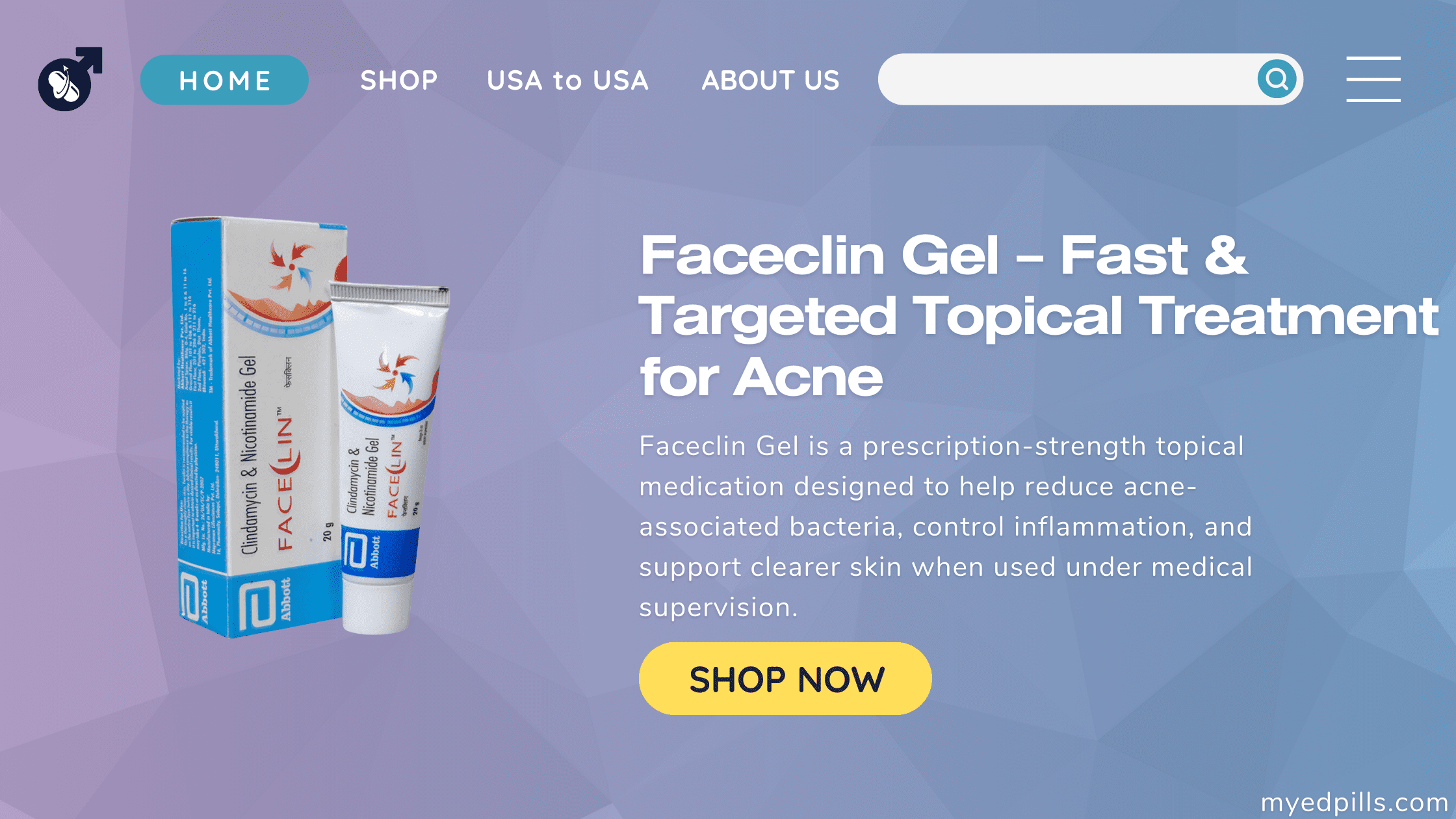
Faceclin Gel is a prescription-strength topical medication designed to help reduce acne-associated bacteria, control inflammation, and support clearer skin when used under medical supervision.
In this blog, we provide a detailed, globally relevant overview of Faceclin Gel — how it works, how to use it, safety considerations, and why it’s an effective choice in acne management.
Disclaimer: This content is for educational purposes only. Faceclin Gel should be used under the guidance of a qualified healthcare professional or dermatologist.
What Is Faceclin Gel?
Faceclin Gel is a topical medication formulated with two key active components:
- Clindamycin – An antibiotic that helps reduce acne-causing bacteria on the skin
- Nicotinamide (Vitamin B3) – Known for its anti-inflammatory and skin-soothing properties
This combination makes Faceclin Gel effective in managing both bacterial proliferation and inflammation — two central factors in acne development.
How Faceclin Gel Works
The active ingredients in Faceclin Gel work through complementary mechanisms:
Clindamycin
Clindamycin targets Cutibacterium acnes (formerly Propionibacterium acnes), the bacteria associated with inflammatory acne. By reducing bacterial load, it helps minimize the formation of inflamed pimples and pustules.
Nicotinamide
Nicotinamide helps calm skin inflammation, redness, and irritation — common features of acne-prone skin. It also supports skin barrier function and can help reduce sebum excess when paired with a proper skincare routine.
Together, these ingredients help control acne both at the bacterial and inflammatory levels.
Case-Study Style Perspective (Illustrative)
Patient Profile (Educational Example):
- Young adult with mixed acne (papules, pustules, and some inflammation)
- Sensitive but not medically contraindicated for topical treatment
- Previously tried basic cleansers without significant improvement
Clinical Objective:
- Reduce inflammatory lesions
- Improve overall skin clarity
- Support longer-term control with minimal irritation
Treatment Strategy:
- Introduction of Faceclin Gel as part of a dermatology-recommended acne care plan
This example shows how Faceclin Gel may be incorporated into a personalized regimen under professional guidance.
How to Use Faceclin Gel
For optimal results:
- Cleanse gently the affected skin area and pat dry.
- Apply a thin layer of Faceclin Gel over the acne-prone areas once or twice daily (as advised by your clinician).
- Avoid eyes, lips, and broken skin.
- Follow the application frequency recommended by your healthcare provider.
Consistency is key — topical acne treatments often require several weeks to show noticeable improvement.
Skincare Tips to Enhance Results
To support acne treatment with Faceclin Gel, consider these additional skincare steps:
- Use a non-comedogenic moisturizer to reduce irritation
- Apply broad-spectrum sunscreen daily
- Avoid harsh scrubbing or abrasive products
- Maintain a balanced diet and hydration
These supportive measures help maintain the skin barrier and complement the action of the gel.
Safety & Precautions
Before using Faceclin Gel, inform your healthcare provider if you:
- Are pregnant or breastfeeding
- Have known allergies to clindamycin or nicotinamide
- Are using other acne medications (especially retinoids or exfoliating agents)
- Have medically diagnosed sensitive or compromised skin
If you experience severe irritation, swelling, or signs of allergy, discontinue use and consult your clinician immediately.
Possible Side Effects
Some individuals may experience mild and temporary discomfort, such as:
- Dryness
- Mild burning or stinging
- Redness
- Peeling
These effects often diminish as the skin adjusts. Persistent or severe reactions should be reviewed by a professional.
Accessing Faceclin Gel Online
For trusted product information and availability, Faceclin Gel can be accessed through the official product page below:
👉 Product link:
https://myedpills.com/product/faceclin-gel-clindamycin-nicotinamide/
Make sure that your purchase and usage comply with medical advice and local regulations.
Frequently Asked Questions
Is Faceclin Gel suitable for all acne types?
It is most effective for mild to moderate inflammatory acne but should be recommended by a clinician.
How long before I see results?
Visible improvement may take 4–8 weeks with consistent use.
Can it be used with other acne treatments?
Your dermatologist may combine it with other therapies — always follow professional instructions.
Summary
FaceclinGel combines clindamycin and nicotinamide to target both bacterial proliferation and inflammation — two key aspects of acne development. When used responsibly under medical supervision, it’s a strong option for managing mild to moderate inflammatory acne.
This blog has covered:
- What Faceclin Gel is
- How it works
- Case-study usage example
- Application guidance
- Safety and side effects
- FAQ and product access link