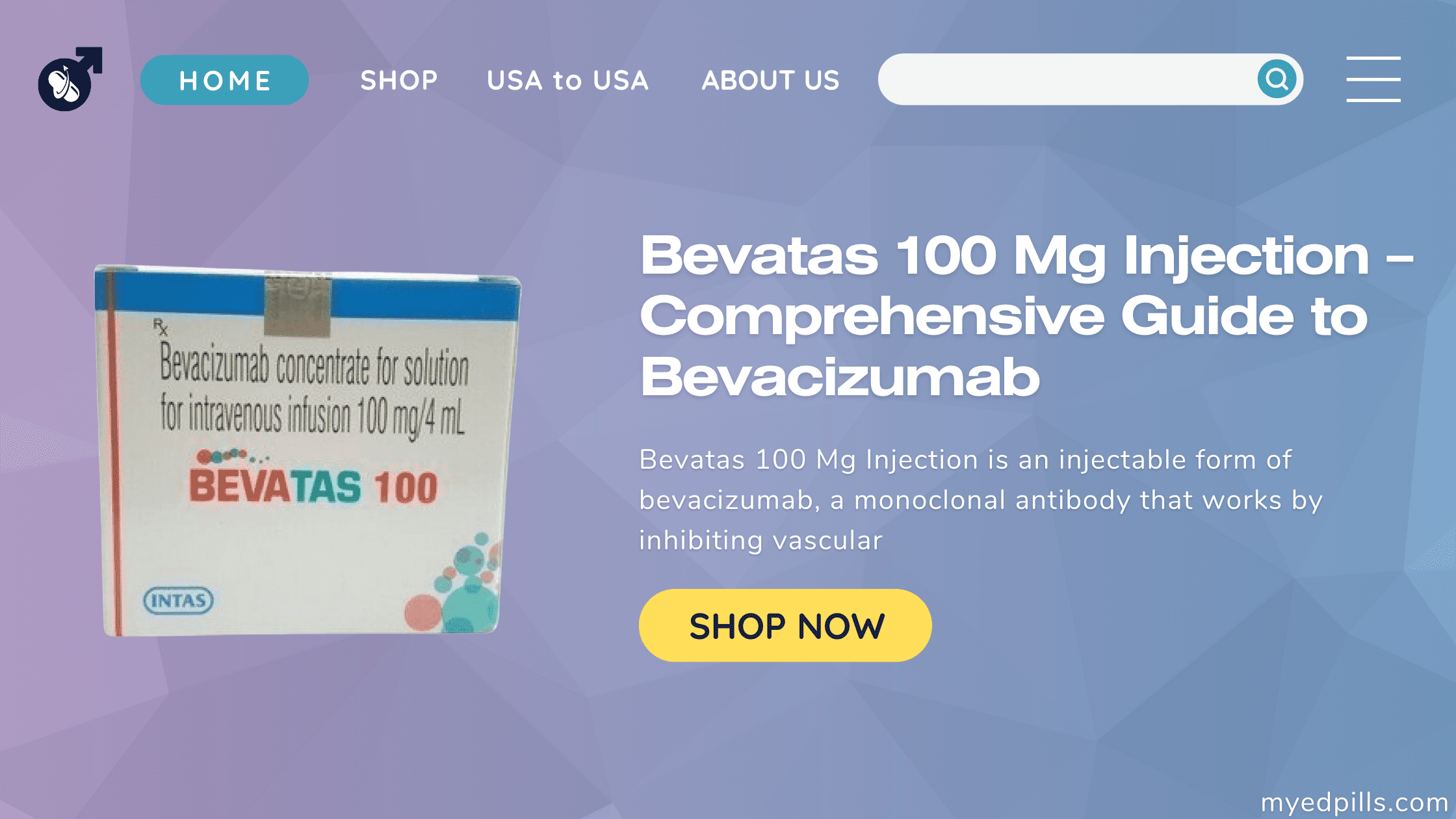
Targeted biologic therapies have transformed modern medical care by offering precise treatment options for complex conditions. Among these, Bevacizumab has become a well-recognized agent in oncology and other clinical areas under qualified medical supervision.
Bevatas 100 Mg Injection is an injectable form of bevacizumab, a monoclonal antibody that works by inhibiting vascular endothelial growth factor (VEGF), thereby helping to regulate abnormal blood vessel growth. This mechanism has therapeutic value in several serious medical conditions when prescribed by a specialist.
This blog provides a comprehensive, globally relevant overview of Bevatas 100 Mg Injection — explaining how it works, its medical applications, safety considerations, and why it should only be used under professional healthcare guidance.
Disclaimer: This content is for informational purposes only. Bevatas 100 Mg Injection should be used only under the supervision of a qualified healthcare professional with a valid prescription and in an appropriate clinical setting.
What Is Bevatas 100 Mg Injection?
Bevatas 100 Mg Injection contains bevacizumab, a monoclonal antibody that targets vascular endothelial growth factor (VEGF). VEGF plays a key role in new blood vessel formation (angiogenesis), which is critical in certain disease processes.
Bevacizumab binds to VEGF, blocking its interaction with receptors on vascular endothelial cells, thereby helping to modulate abnormal blood vessel growth.
Because this medication acts through specific biological pathways, it is typically administered by healthcare professionals in controlled clinical environments.
How Bevatas 100 Mg Injection Works
The active component of Bevatas 100 Mg Injection, bevacizumab, works at the molecular level to inhibit VEGF. By doing so, it helps:
- Reduce angiogenesis (formation of new blood vessels)
- Restrict nutrient supply to abnormal or rapidly proliferating cells
- Support controlled modulation of disease-related processes
This mechanism is central to its use in oncology and other specialties where VEGF plays a pathological role.
Case-Study Style Perspective (Illustrative)
Patient Profile (Educational Example):
- Adult patient with a confirmed diagnosis requiring anti-angiogenic therapy
- Treated under an oncologist’s supervision
- No contraindications identified after comprehensive evaluation
Clinical Objective:
- Modulate disease progression through targeted VEGF inhibition
- Improve clinical outcomes when integrated into an overall treatment plan
Approach:
- Introduction of Bevatas 100 Mg Injection as part of a multidisciplinary care strategy
This example illustrates the type of clinical context in which Bevatas 100 Mg may be appropriately used.
Common Medical Uses of Bevatas 100 Mg Injection
Healthcare professionals may use Bevatas 100 Mg Injection in the treatment of conditions where VEGF plays a significant pathological role, including:
- Certain advanced cancers (as part of combination therapy)
- Tumor types associated with pathological angiogenesis
- Off-label uses determined by specialist clinicians
Each use is based on clinical evidence, patient-specific factors, and professional judgment.
How Bevatas 100Mg Injection Is Administered
Bevatas 100 Mg Injection is administered by a healthcare professional, typically in a clinical or hospital setting. Key points include:
- Prepared by trained clinical staff
- Administered via intravenous infusion
- Doses and scheduling are determined by the prescribing physician
- Monitoring before, during, and after administration is essential
Patients should never self-administer this injection; proper clinical protocols must be followed.
Safety Considerations & Precautions
Before using Bevatas 100Mg Injection, healthcare providers will assess:
- Full medical and surgical history
- Cardiovascular, renal, and hepatic status
- Blood pressure and coagulation profile
- Concurrent medications and therapies
Because bevacizumab affects angiogenesis and vascular pathways, careful monitoring is critical.
Possible Side Effects
Like all biologic therapies, Bevatas 100 Mg Injection may cause side effects. Some may include:
- Hypertension (increased blood pressure)
- Fatigue
- Gastrointestinal symptoms
- Risk of bleeding or impaired wound healing
Any unexpected or severe reaction should be immediately reported to the treating medical team.
Accessing Bevatas 100 Mg Injection
For verified product information and availability, Bevatas 100 Mg Injection can be accessed through the official product page:
👉 Product link:
https://myedpills.com/product/bevatas-100-mg-injection/
Be sure that all prescribing and usage are conducted in compliance with local medical regulations and healthcare professional guidance.
Frequently Asked Questions
Is Bevatas 100 Mg Injection suitable for all patients?
No. Only a qualified healthcare professional can determine if this treatment is appropriate based on individual diagnosis and health status.
Does it cure underlying conditions?
Bevacizumab is used to support specific therapy goals; it is not a cure but may be part of a comprehensive treatment plan.
How is it given?
It is administered by trained clinical staff via intravenous infusion in a medical setting.
Summary
Bevatas 100 Mg Injection is a targeted therapy containing bevacizumab — a monoclonal antibody that inhibits VEGF-mediated angiogenesis. When used under qualified medical supervision, it plays a therapeutic role in selected oncology and related clinical contexts.
This blog has explored:
- What Bevatas 100 Mg Injection is
- How it works
- Illustrative clinical context
- Medical uses and administration
- Safety and side effect considerations
- FAQs and product access link